Meria obtains the MiCA license


What Is Threshold and Its tBTC Cryptocurrency?
Bitcoin is often criticized for what is considered its main drawback: its lack of programmability, and therefore of use cases. Threshold aims to address this issue by making Bitcoin useful and usable across the various markets of decentralized finance. To achieve this, Threshold created tBTC, an interoperable asset collateralized 1:1 by real BTC. In this article, we explain what tBTC is, how it works, its use cases, and Meria’s role within the project.
1. What is tBTC?
2. How does tBTC work?
3. tBTC use cases
4. Meria joins Threshold as a validator
5. What is the T token?
6. Threshold and tBTC: Key takeaways
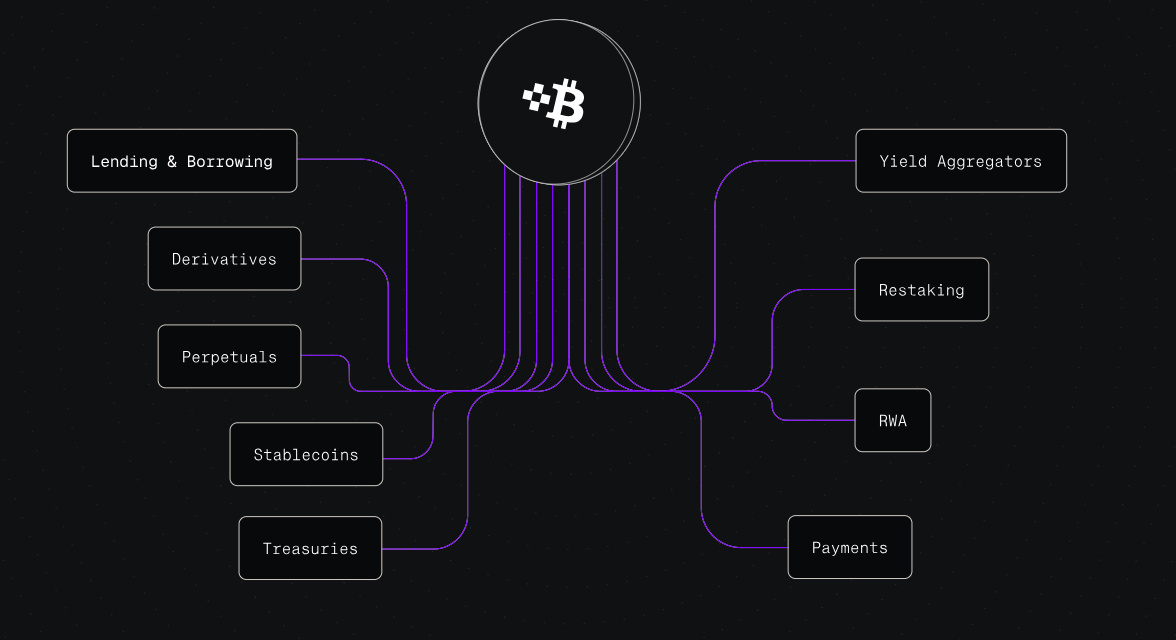
What is tBTC?
tBTC is Threshold’s wrapped BTC, developed by a protocol aiming to become a leader among centralized wrapping solutions such as Coinbase, Binance, or BitGo. Threshold stands out from its competitors by placing a strong emphasis on decentralization, thereby strengthening the protocol’s security.
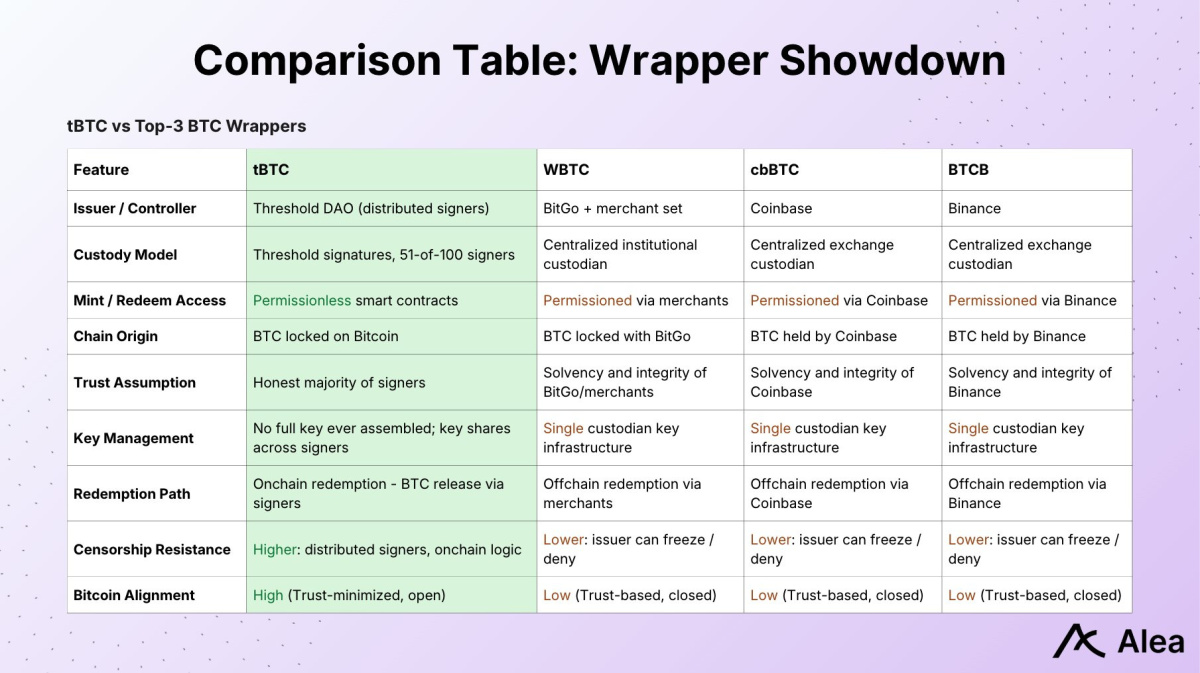
WBTC, cbBTC, and BTCB are the wrapped BTC versions offered by the competitors mentioned above. These three tokens rely on centralized custodians with permissioned mint/redeem systems, single keys, off-chain redemptions, and the risk of freezing or refusal by the issuer. As a result, these wrapped BTC tokens are trust-based, meaning they require trusting a third party, which makes them less aligned with Bitcoin’s founding principle of sovereignty. Let’s now see how Threshold manages to further decentralize its tBTC.
How does tBTC work?
tBTC is an ERC-20 token—the standard on the Ethereum Blockchain that is fully permissionless, allowing Bitcoin holders to bridge their assets to other blockchains and protocols. To do so, users simply connect to the Threshold application and provide an Ethereum address as well as a Bitcoin address. Depending on the chains on which tBTC is minted, the transaction can be gasless, meaning free of gas fees.
The original BTC remains locked on the Bitcoin blockchain
) in a Threshold multisignature wallet. At least 51 signers out of 100, randomly selected from a pool of authorized nodes, must cooperate to validate the transaction. This is the key difference compared to other wrapped BTC solutions, which are fully held by CEXs, including the private keys themselves.
tBTC use cases
tBTC was designed to generate yield on idle, dormant BTC. Thanks to the ERC-20 standard, tBTC can be deployed on the Ethereum blockchain and its main Layer 2 networks such as Starknet, Sui, or Solana
tBTC can be used on lending/borrowing protocols, to provide liquidity or be deposited into vaults. Below is a non-exhaustive list of protocols where tBTC can be used:
• Aave
• Spark
• Compound
• Curve
• Uniswap
• Aerodrome
• Yield Basis
• Ember
• Starknet BTC staking
For example, your idle BTC can be deposited on a lending/borrowing platform such as Aave to borrow stablecoins , which can then be deployed in decentralized finance, used to buy other cryptocurrencies, or to farm airdrops.
Meria joins Threshold as a validator
Meria joins Threshold as a validator on the Starknet network, for BTC staking
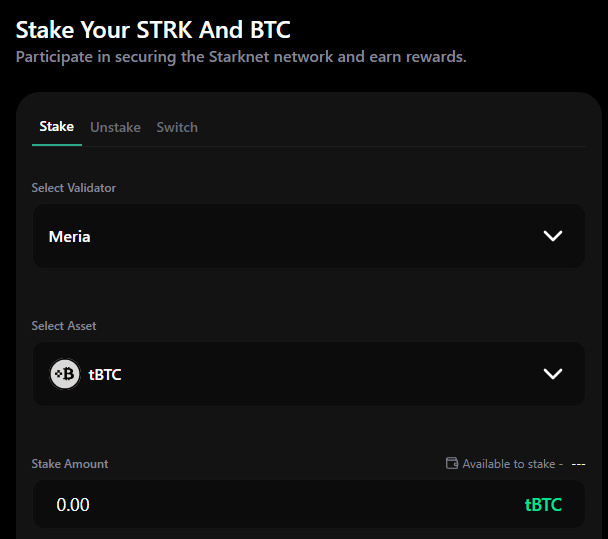
Users can deposit their tBTC to generate yield while benefiting from Meria’s proven infrastructure and technical expertise. Rewards are paid in STRK tokens minted as part of an incentive campaign launched by Starknet.
What is the T token?
The T token is the staking and governance token of the Threshold Network. It can be used to secure the network, earn rewards, and participate in decision-making regarding the project’s future.
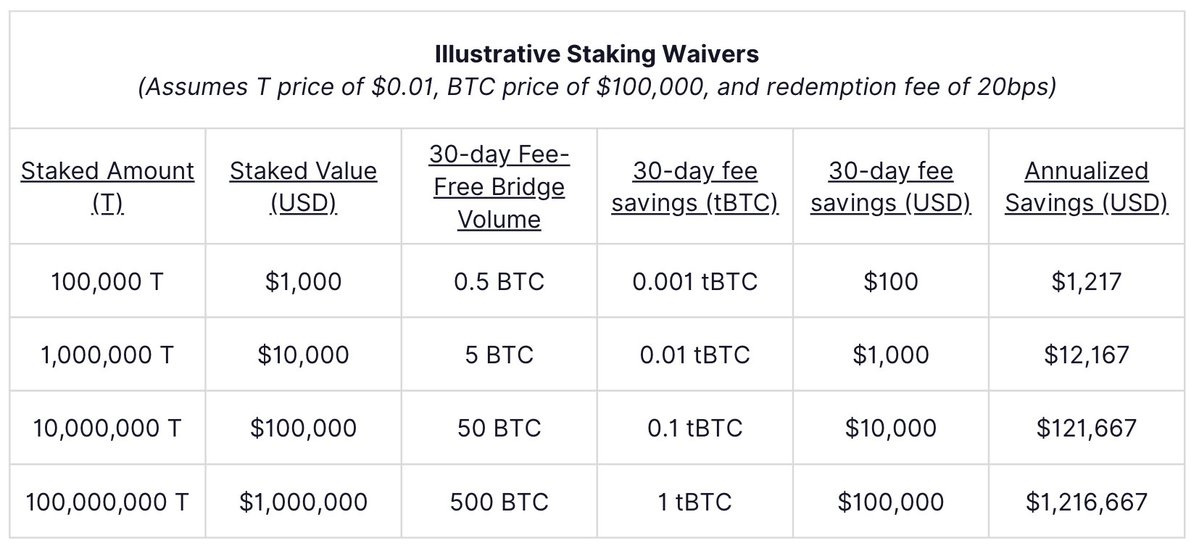
Staking T now also provides fee exemptions on tBTC-to-BTC bridges, which are initially priced at 20 basis points, or 0.20%.
Regarding token allocation:
• 4.5B for NU token holders
• 4.5B for KEEP token holders
• 1B for the Threshold DAO treasury
Threshold and tBTC: Key takeaways
Threshold addresses both Bitcoin’s lack of use cases and the decentralization issues of wrapped BTC by relying on a multisignature system in which a transaction can only be validated if at least 51 validators reach consensus. tBTC can then be used across numerous DeFi protocols to generate yield or be posted as collateral.