Meria obtient la licence MiCA


THE HISTORY OF TEZOS
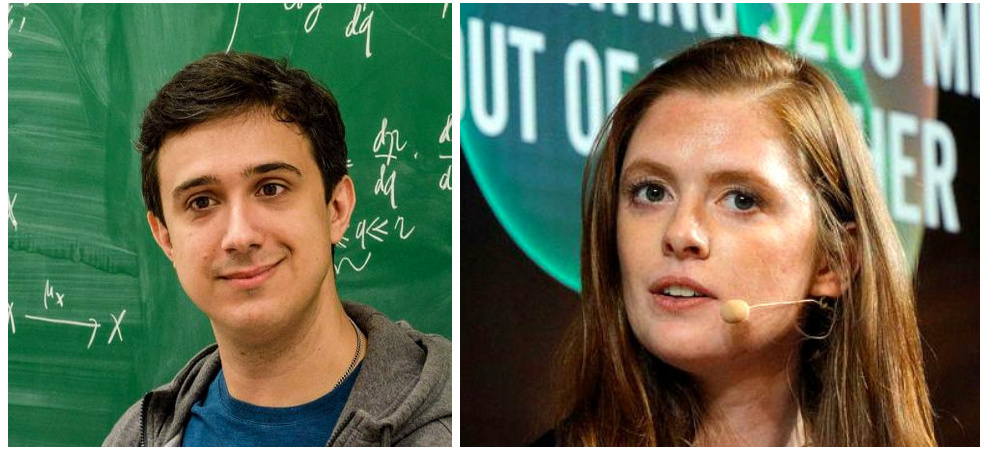
Tezos is a Proof-of-Stake blockchain created by the French couple Arthur Breitman and Kathleen Breitman. In 2017, after more than three years of development, the Breitmans organized a major fundraising campaign to support the future of the project. This ICO was a resounding success, raising over $232 million. At the time, it was the largest fundraising event in the history of cryptoassets (surpassed in 2018 by EOS, which raised more than $4 billion). In June 2018, the Tezos mainnet was finally launched, and the $XTZ token became available for purchase after a few delays.
HOW TEZOS WORKS
Tezos technology is built on an open-source network that uses a dedicated language, Michelson, for smart contract development. Just like Ethereum, it is therefore possible to build dApps on Tezos, making it a solid choice for DeFi protocols.
Despite its similarities with Ethereum and other Layer 1 blockchains, Tezos features several innovations that have allowed it to establish itself in an extremely competitive blockchain environment.
Liquid Proof of Stake
The Tezos blockchain uses a Proof-of-Stake consensus algorithm that slightly differs from those of its competitors: Liquid Proof of Stake (LPoS). Unlike the traditional Delegated Proof of Stake (DPoS) system, LPoS allows network delegators to change validators at any time, with no lockup period, thereby improving network security and scalability. This model also makes participation in network validation more accessible, as the required hardware costs are relatively low. As a result, validator diversity increases, ultimately strengthening the decentralization of the blockchain.
Self-amendment and on-chain governance system
Tezos relies on an on-chain governance system that enables the protocol to self-amend and decide on future network upgrades. Under this model, network validators are responsible for governance voting. Their voting power is directly proportional to the number of tokens they own and that have been delegated to them (the more tokens a validator holds, the greater their voting power). Each governance proposal on Tezos goes through four stages, with the full process lasting around 22 days. This DAO-like system notably helps prevent hard forks that could lead to a sudden and disruptive chain split.
TEZOS’ OBJECTIVES
Launched in 2017, Tezos is not one of those “new” blockchains that experienced explosive success during the latest bull run. Nevertheless, development teams continue their efforts to attract more protocols and users to the network through regular upgrades, the most recent being "Lima" and "Kathmandu". Like its competitors, Tezos is well aware of the challenges of blockchain scalability and is currently developing solutions designed to meet the performance targets set by its teams.
In addition to hosting multiple DeFi protocols, Tezos is expanding into real-world enterprises through a wide range of prestigious partnerships such as McLaren and Red Bull in Formula 1, Manchester United, and the e-sports team Vitality.
THE $XTZ TOKEN
The XTZ token is the utility token of the Tezos blockchain. XTZ allows users, among other things, to participate in governance voting, help secure the network through staking, and pay transaction fees on the network.
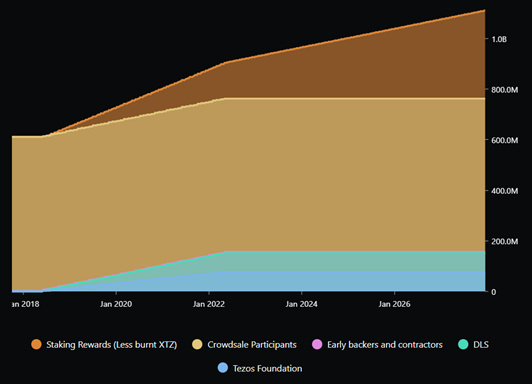
XTZ token inflation is approximately 5% per year, but mechanisms exist to burn tokens in order to control the total circulating supply. Below, you will find the emission schedule and distribution of XTZ tokens.
GOING FURTHER
• Official Tezos website available here